Introduction
What if you could power your devices, lights, and cooler without ever searching for an electrical hookup? Solar panels car camping makes this freedom possible. You pull into a remote spot, set up your panels, and enjoy all the comforts of home while surrounded by wilderness. This setup transforms how you experience the outdoors. No more draining your car battery or rationing phone usage. Let's explore how to build the perfect solar system for your next car camping adventure.
Why Solar Power Works Perfectly for Car Camping
Car camping sits in a sweet spot for solar energy. You have the vehicle capacity to carry larger panels and batteries. You also have access to flat surfaces like roofs, hoods, or ground space near your campsite.
Unlike backpacking, weight isn't your primary concern. Unlike RV camping, you don't need a massive permanent installation. This flexibility lets you customize your setup based on each trip's needs.
Solar energy also keeps you self-sufficient. You can stay at dispersed camping sites for days or weeks without moving. Your panels quietly generate power while you hike, fish, or relax.
Choosing the Right Solar Panel Setup
Portable Folding Panels
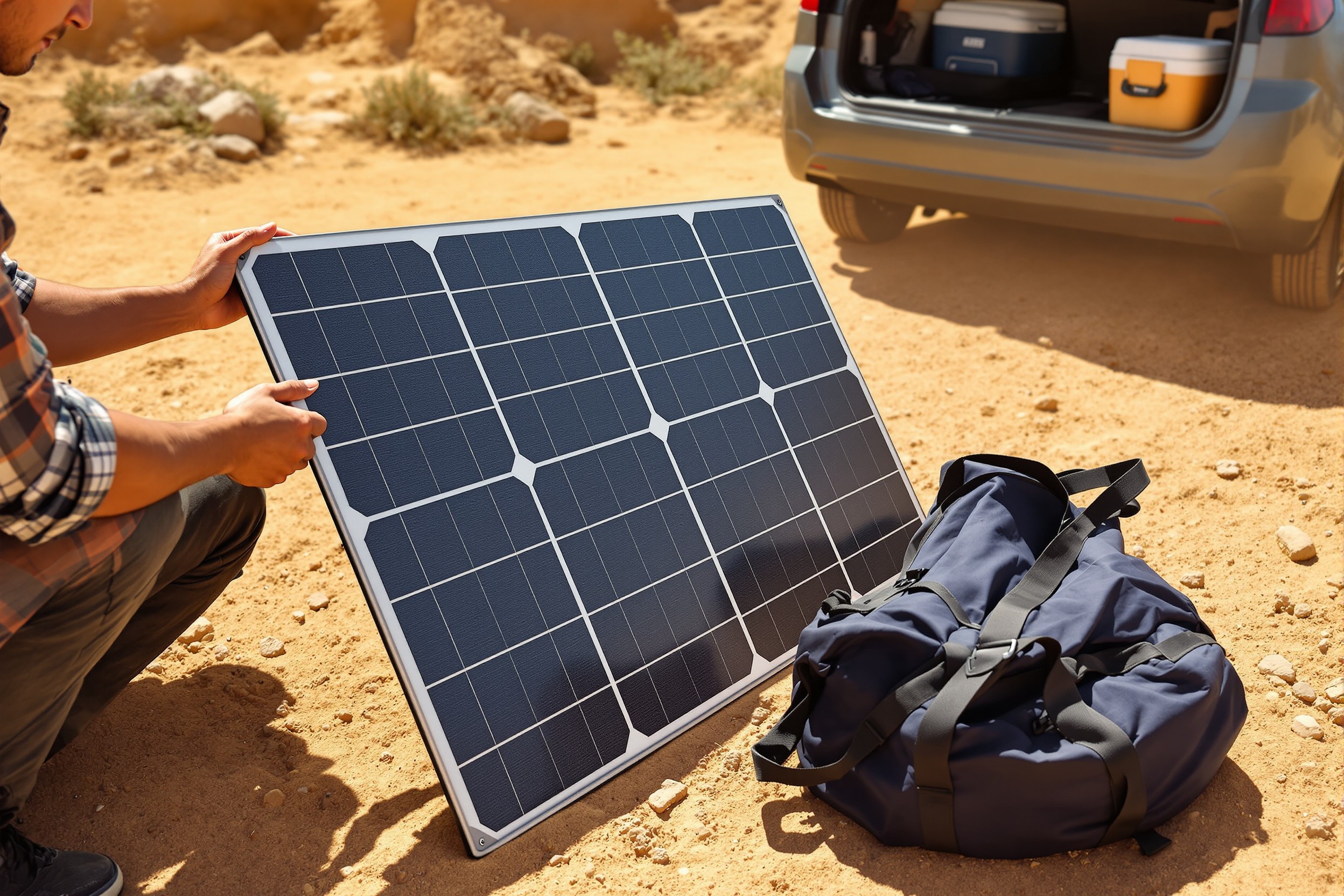
Folding panels offer maximum flexibility. They pack flat for transport and unfold to capture sunlight at optimal angles. Most range from 60 to 200 watts. A 100-watt panel handles basic charging needs for phones, cameras, and LED lights.
Rigid Rooftop Panels
Permanent rooftop installations work well if you camp frequently. They're always ready to collect energy while you drive or park. The downside? You can't adjust their angle or move them into better sunlight.
Flexible Panels
These lightweight options conform to curved surfaces. They work great for unconventional mounting spots but typically produce less power per square foot than rigid panels.
Sizing Your Battery and Power Station
Your battery bank determines how much energy you can store for cloudy days and nighttime use. Calculate your daily power consumption first.
A typical car camping setup might include a 12V cooler drawing 40 watts, LED lights using 10 watts, phone charging at 15 watts, and a laptop needing 60 watts. Add these together and multiply by hours of use.
For most campers, a 500-1000 watt-hour power station paired with 100-200 watts of solar panels car camping equipment provides comfortable off-grid living for extended trips.
Installation Tips for Maximum Efficiency
Position matters more than panel size. A properly angled 100-watt panel outperforms a 200-watt panel lying flat in shade.
Aim your panels directly at the sun. Adjust them throughout the day if possible. Even partial shading from trees or your vehicle dramatically reduces output.
Keep panels cool. Airflow underneath prevents overheating, which decreases efficiency. Consider tilting ground-mounted panels slightly to allow air circulation.
Essential Accessories for Your Solar Setup
A charge controller protects your battery from overcharging. MPPT controllers cost more but extract 15-30% more power than PWM models.
Quality cables matter. Thin wires lose power over distance. Use appropriately gauged cables, especially for runs longer than 10 feet.
A battery monitor shows exactly how much power you're generating and consuming. This data helps you adjust habits and avoid unexpected dead batteries.
Real-World Performance Expectations
Expect your panels to produce 70-80% of their rated output under ideal conditions. Cloud cover, haze, and suboptimal angles reduce this further.
A 100-watt panel generates roughly 300-500 watt-hours on a sunny summer day. Winter days with shorter sunlight hours produce less. Plan your battery capacity accordingly.
Making Solar Panels Car Camping Work for You
Start small and expand based on experience. A basic setup with a 100-watt folding panel and 500 watt-hour power station costs around $500-800. This handles weekend trips easily.
Track your actual power usage on your first few trips. You'll quickly learn whether you need more capacity or if your current setup exceeds your needs.
Solar technology keeps improving while prices drop. The gear available today makes off-grid car camping more accessible than ever.
Take Your Next Step
Ready to build your solar setup? Start by listing every device you want to power while camping. Calculate the total wattage, then choose panels and batteries that meet those needs with a 20% buffer for cloudy days. Your perfect off-grid adventure awaits.